Lake Titicaca (like Timbuktu and Kathmandu) is one of those names you hear in your life but are never quite sure if it is an actual place. We were pleasantly pleased to confirm that it is and we enjoyed spending nearly 10 days in and around the lake both on the Peruvian and Bolivian side.
 The access city to the lake from Peru is called Puno. Puno is an intense and busy place for its smaller size, but we quite liked the buzz and as it is a popular tourist town, there were many great restaurants (our favorite being Machu Pizza!) and affordable hostels.
The most popular thing to do out of Puno is visit a few of the nearby islands, either on a day-trip or by doing an overnight homestay. We opted for the 2 day/1 night option which allowed us to stay on one of the islands with a family.
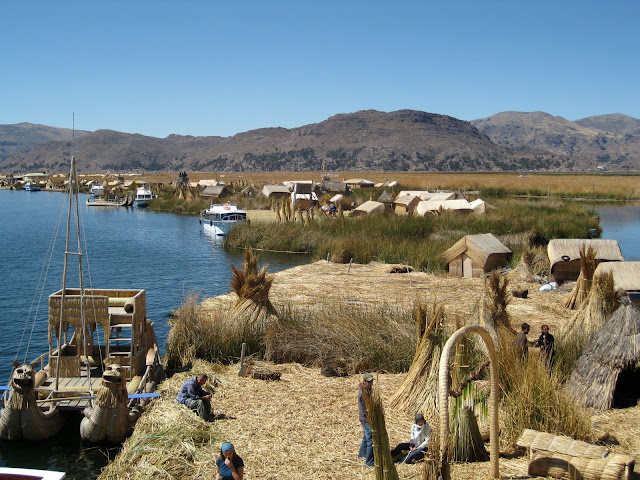
Upon departing Puno, nearly all the tourist boats first stop at the Uros floating islands. These islands are both fascinating and sad. Fascinating because they are literally floating through a combination of reeds and reed beds and sad because they are sustained only through mass tourism at this point. In the 1500s, people built and moved to these islands to avoid hostel neighbors and the Spanish invasion that was occurring throughout the region. At one point, these were living and breathing cultures that supported themselves by fishing and trading. However, now the society is a shadow of its former self, with only a small percentage of “islanders” actually living on the islands in huts made of reeds. Their only source of income is through the tourists that are dropped off each day for 30 minutes, and pressure to purchase their handicrafts or take a ride in one of their traditional boats is overt, and somewhat uncomfortable.
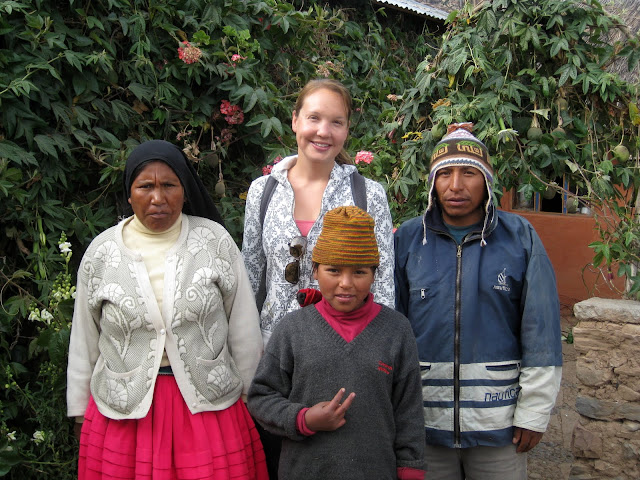 After Uros, the boat continued for another couple hours to the island of Amantani. Upon arriving, Ted and I were assigned to a family (based on a community-organized rotation system). Families look forward to hosting tourists for homestays because it is a significant source of income for small amount of work. Our family was quite lovely, however, our host mother was noticeably offended that Ted and I didn’t wish to purchase any of her homemade hats or scarves that she showed us over lunch. Though I understand that her hope is to sell her items on the few occasions a month that she has the opportunity to host visitors, Ted and I couldn’t help but notice how her attitude towards us after that point changed for the worse. Kinda a bummer.
We managed to entertain ourselves by exploring the small island by foot and visiting the highest sections of the island and capturing some amazing views and the sunset.
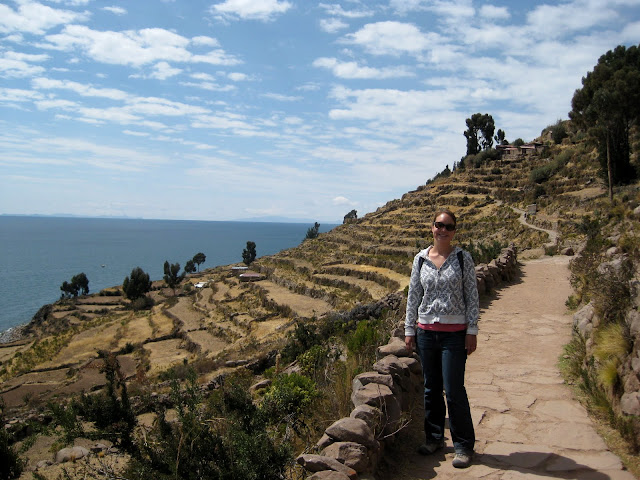 The next day we traveled to the island of Taquile which is quite close to Amantani. The people of Taquile are known nationwide for their incredible weavings – everything from hats and belts to bracelets and vests. They have a community-organized coop that pools all the work from various artists around the island and the whole island benefits from the tourism and the purchases. Quite impressive indeed!
After a half-day on Taquile, we headed back to dry land for another night in Puno. Though the islands are just a couple hours away by boat, the contrast between the modernity of Puno and the traditional agricultural and artisanal economies of Amantani and Taquile make you feel like you’ve stepped back in time.


 Pucara, Intag River Valley, Ecuador – The Intag River Valley, a gorgeous and lush mountain landscape northwest of Quito, is home to one of the most bio-diverse zones in all of Ecuador (a UNESCO biodiversity “hot-spot” and deemed one of the 10 most bio-diverse ecosystems in the world, due largely to its extreme elevation change – sea level to 11,000 ft in only a couple dozen miles). In addition to its one-of-a-kind forests, flora, and fauna, the region is also home to a wealth of valuable minerals and ores beneath its surface. A number of mining enterprises are in pursuit of digging rights, and many locals are tempted by the short-term financial returns promised by these companies. Without a financially viable alternative, the region is doomed to be exploited and destroyed by the mining industry.
 One of the most lucrative opportunities that has arisen from CASA’s work in Pucara is a well organized community-based tourism infrastructure. While initially developed primarily for the volunteers, Pucara is now well equipped and actively receiving independent travelers interested in an authentic experience interacting with rural Ecuadorian families and communities. A rotating homestay program with 20 participating local families allows travelers the chance to live, eat, sleep, and participate in lives of the residents of Pucara for US $10 dollars per night (which includes 3 meals). The rotating nature of the program ensures an equal distribution to families throughout the community. The CASA-established Spanish school, the first of its kind in Intag, allows travelers to hone their language skills while supporting local women teachers, all of which are government-certified. Travelers pay US $6 per hour for private lessons. Of course, there are always volunteer opportunities available, independently or through community mingas. The Intag River Valley also has a wealth of activities to offer visitors, from guided or independent hikes through protected areas and native cloud forest, to natural hot springs, local markets, and agro-ecological tours.
 Top 10 Things We Loved
 9.
9.  1.
1.  3. How prolific and useful knee-high rubber boots can be – from hiking in the rainforest, to working at a
 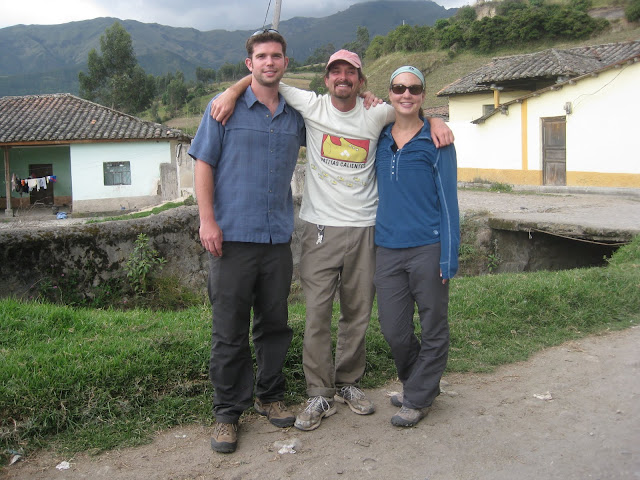 Ok, he´s not officially an Ecuadorian citizen yet, but that´s where his heart is. Meet Peter Shear, non-profit founder, father to two beautiful Ecuadorian girls, University of Michigan alumnus, and one of the most generous, genuine, and kind people I have ever met. Originally from Vermont, Peter has spent the better part of the past 14 years living in northern Ecuador, raising his family, and helping rural communities through his non-profit, the Inter-American Center for the Arts, Sustainability, and Action (CASA).
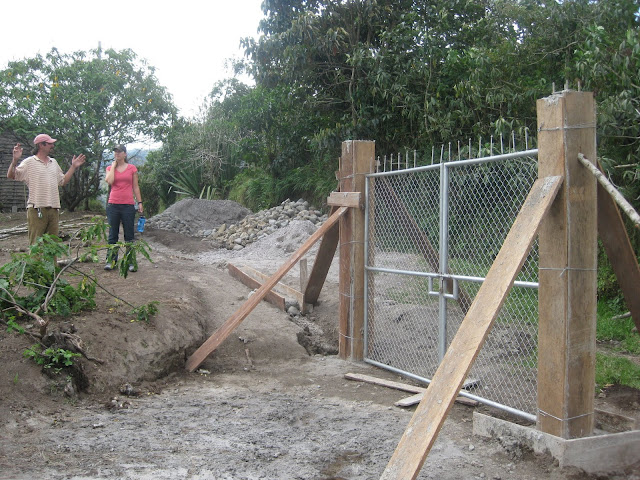 The Inter-American Center for the Arts, Sustainability, and Action
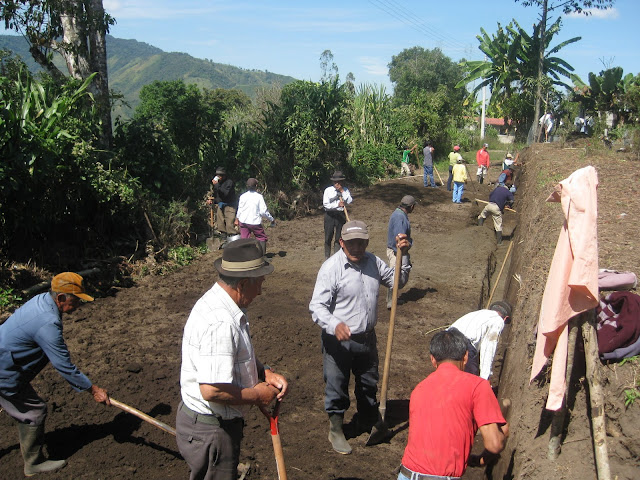 Purchase of land and construction of community organic gardens.
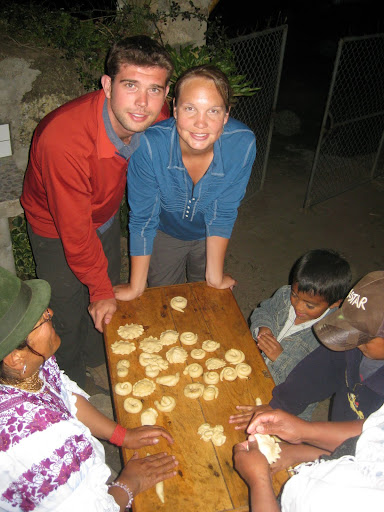
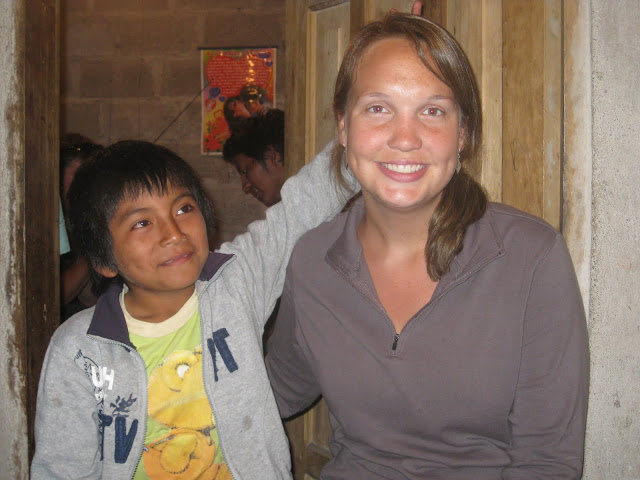 One of the most lucrative opportunities that has arisen from CASA’s work in Pucara is a well organized community-based tourism infrastructure, which we had the pleasure of participating in. While initially developed primarily for the volunteers, Pucara is now well equipped and actively receiving independent travelers interested in an authentic experience interacting with rural Ecuadorian families and communities. A rotating homestay program with 20 participating local families allows travelers the chance to live, eat, sleep, and participate in lives of the residents of Pucara for US$10 dollars per night (which includes 3 meals). The rotating nature of the program ensures an equal distribution to families throughout the community. The CASA-established Spanish school, the first of its kind in the region, allows travelers to hone their language skills while supporting local women teachers, all of which are government-certified. Of course, there are always volunteer opportunities available, independently or through community mingas.
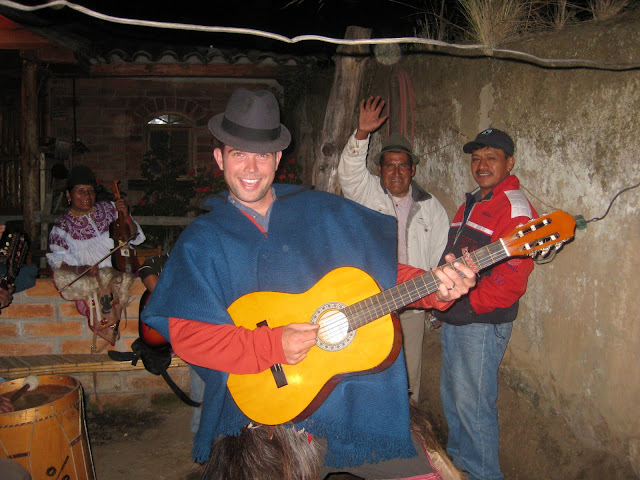 Impressive, right? What’s more impressive is that Pucara is only one of 5 communities across the northern Andes that Peter is working with, and each has its own set of projects, resources, accomplishments, challenges, and approach to community tourism (we were able to visit 4 of these communities with Peter).
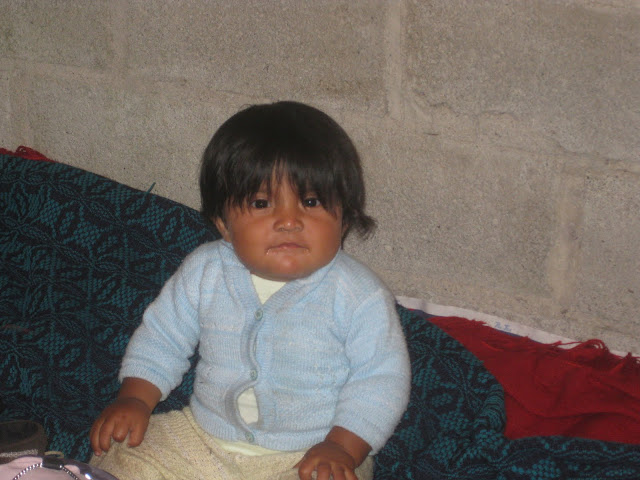 Andres is her 10-year old brother and Maria is their 6-year old sister. The family lived about a 20 minute walk from ‘town’. Though there were certainly many awkward silences on that initial walk home, we, or Ted rather, was able to break the ice and make conversation. Once at home we met another brother named Victor, who is 23, and the mother/grandmother of the home named Celia. There is also another sister that is 18 but she is away at university several hours away. The family did not speak any English and I am a better listener to Spanish
 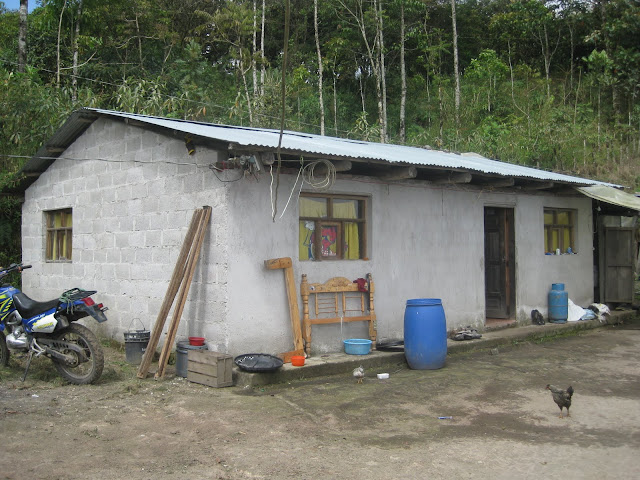 The family’s home was modest to say the least. When you walked in the door, there was a central room that was used as the kitchen, living and dining room. There were then four small bedrooms off the main area. Ted and I shared one of the rooms and the other six people shared the remaining three bedrooms. The bathroom was connected to the house but you had to go outside to access it and it was not enclosed. The dishes and laundry were also done outside the old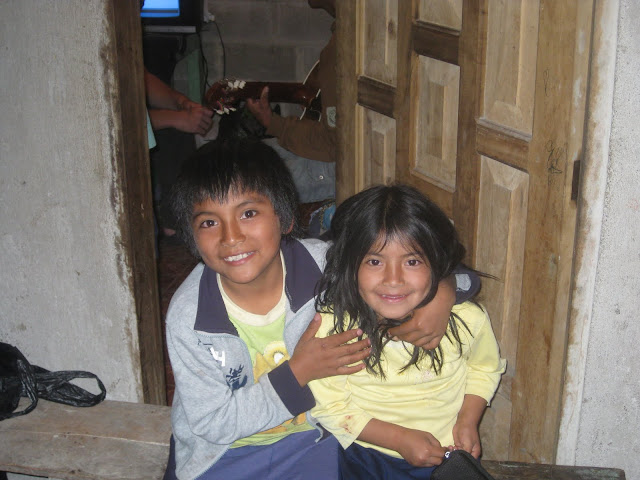
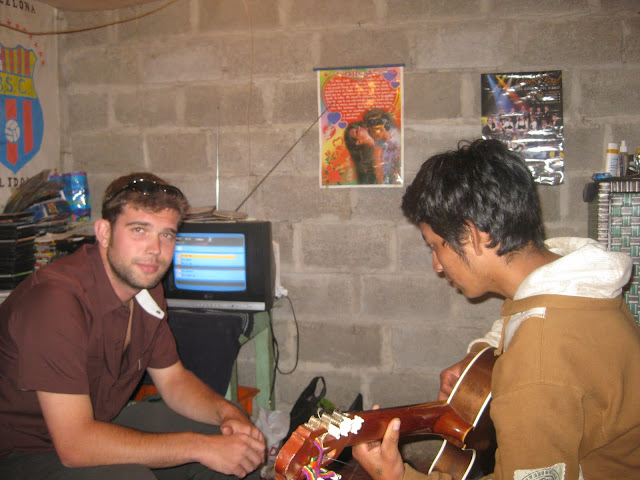 Ted spotted a guitar in Victor’s room the first night we were there and after removing a broken string and tuning it up he learned that Victor didn’t know how to play but that wanted to learn. For the remainder of the week, Ted and Victor sat down in the evening and Ted gave Victor some guitar lessons.